


James “Andy” Anderson is one of the WWII Veterans that I mention in Chapter One of my memoir, Tell Me About Joy. The following is his account of his experiences during the war. Anderson was 92 years old when I interviewed him for the March 2015 issue of Broad Ripple Magazine.
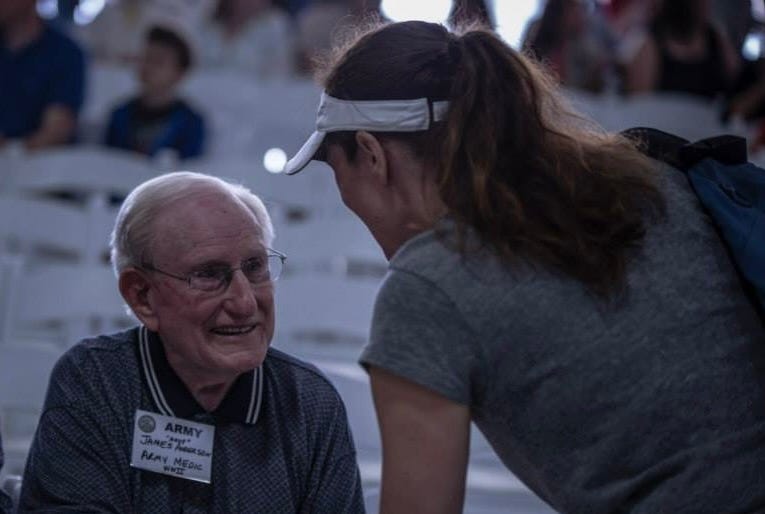
In 2015, after serving in WWII as a medic in Patton’s 3rd Army, Andy Anderson took a historic trip back to Germany for the 70th anniversary of an event he played a role in: the liberation of Buchenwald concentration camp. April 11th, 1945.
Anderson is from Indianapolis, and missed his high school graduation in the spring of 1942 because he’d been drafted within days of the attack on Pearl Harbor. He did, however, receive his diploma in 1943, while dressed in uniform.
“At the ceremony, the school made a big deal about me being in the Army and what I was doing. I was so embarrassed,” recalled Anderson, who still turned pink in the cheeks when speaking about that day.
Interestingly, Anderson spent a portion of his training as a subset of the Canadian Armed Forces. Anderson thinks it’s because of the secrecy around their training.
The training dealt with mustard gas, heavily used by the Germans during WWI. The Allied forces feared it would be deployed again. During these exercises, Anderson’s team was sent into a Canadian forest and was exposed directly to mustard gas. One unfortunate soldier did not have his mask on securely and died during training.
“I still have the burn marks on my skin from the exposure,” said Anderson.
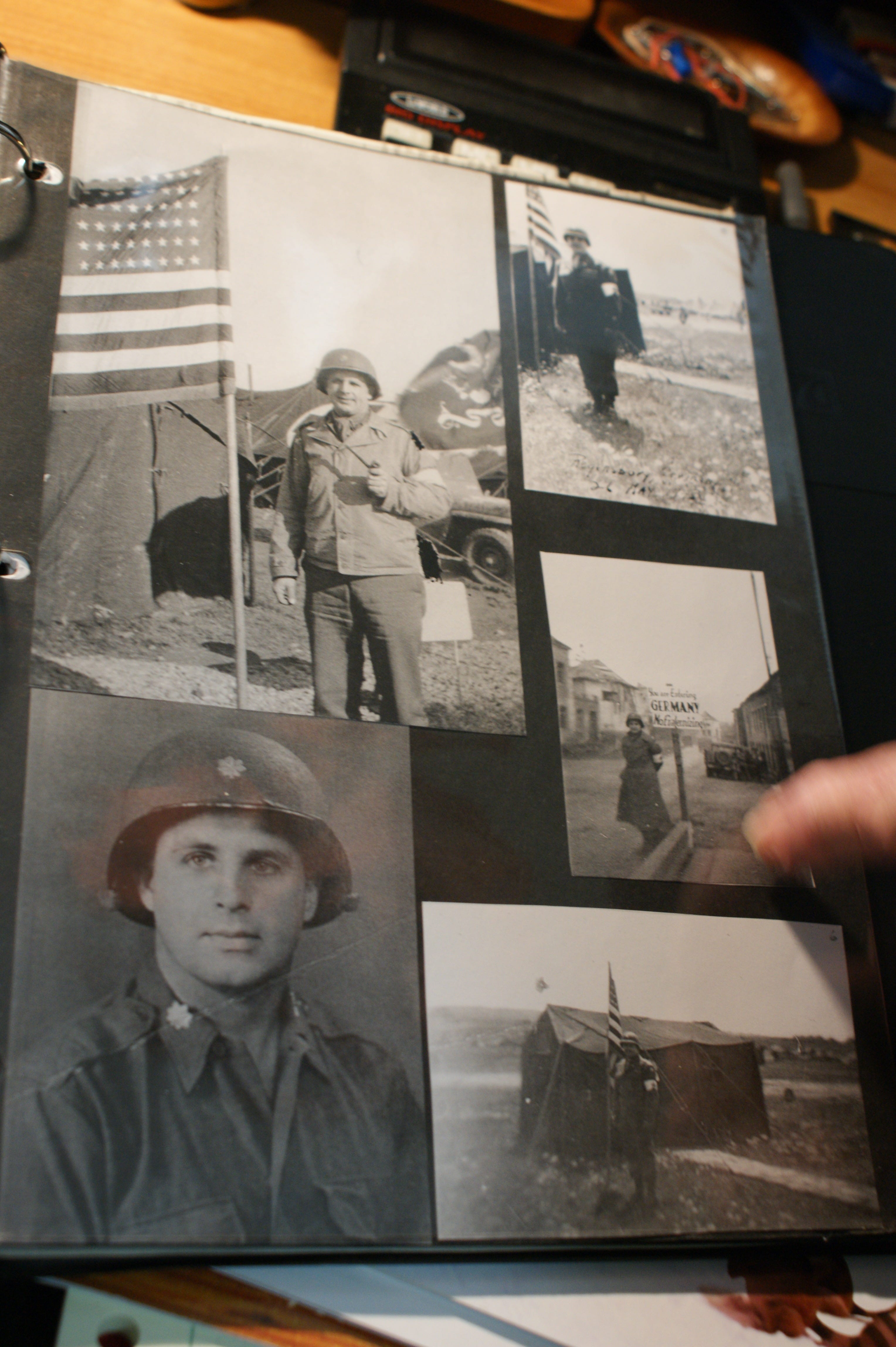
After training in Canada, the 94th Medical Gas Treatment Battalion was shipped over to Pontypridd, Wales. They were stationed there for nearly four months.
“There were no buildings for housing in Pontypridd, so we stayed with families. I still keep in touch with the family that boarded me,” shares Anderson. One day, while he was standing outside in the middle of the day, he looked up because the sky was dark with Allied aircraft heading to Normandy for D-Day.
Anderson and his unit crossed the English Channel ten days after D-Day, landing at Utah Beach, Normandy. Assigned to Patton’s 3rd Army, they moved at a brisk pace across the European peninsula.
“Patton was always in a hurry,” says Anderson, “We did not stay anywhere very long if he could help it.”
While moving swiftly through Germany, the 3rd Army discovered a mustard gas depot, which put Anderson’s training to the test as they disabled the bombs, apparently left over from a few decades before, but still potentially fatal.
“It looked as if it was a backup plan or something that could be used,” says Anderson.
Another interesting find by his unit was new technology that the German military had engineered: functional jets for combat. “We found a jet under camouflage netting hidden in the forest near a battle site that exceeded the capabilities of our planes at the time,” shared Anderson.
Anderson would stay with the 3rd Army until the end of the war. Working the front lines, Anderson never carried a weapon, only injured soldiers to the safety of the medic tents.
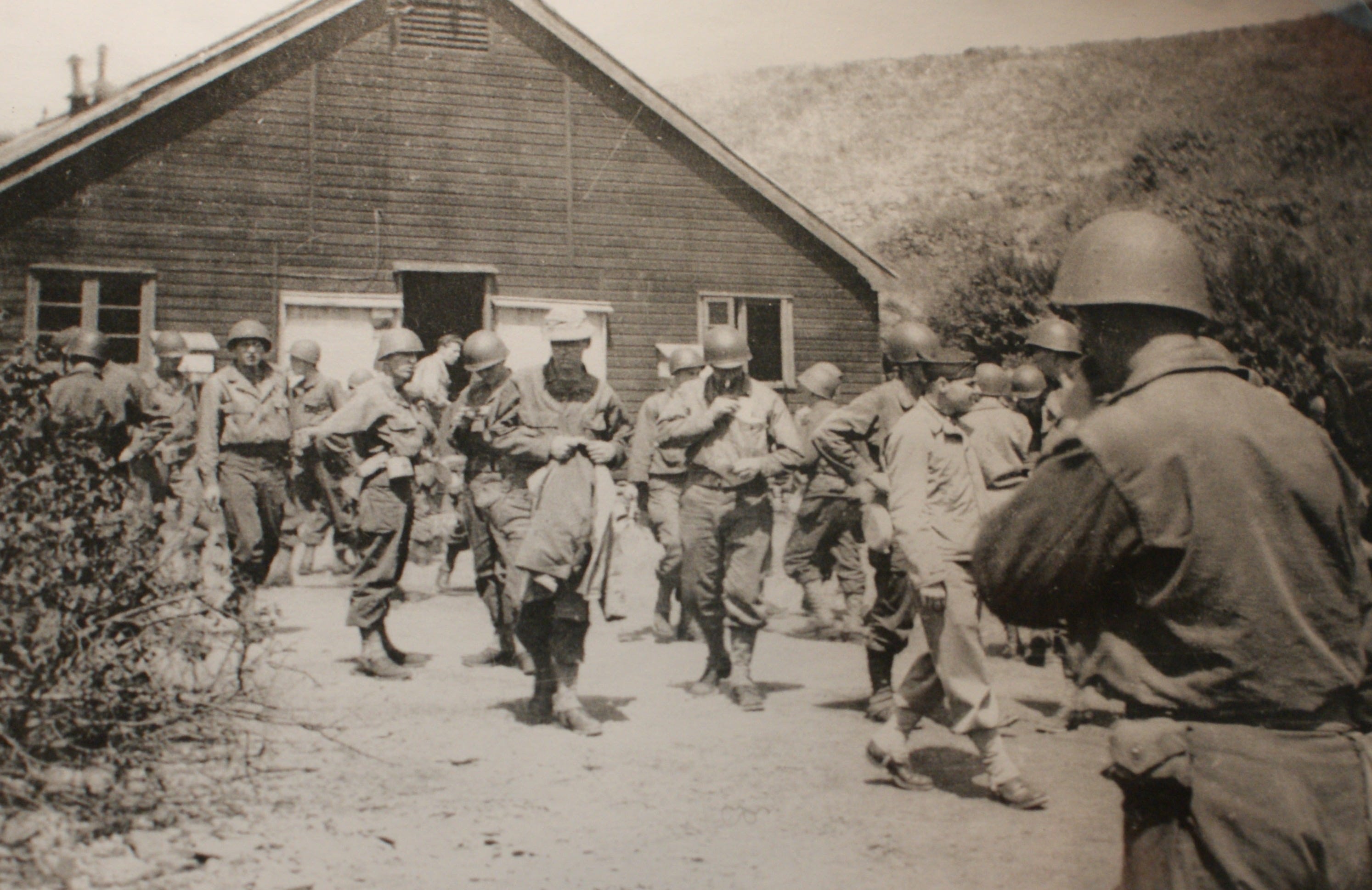
“We were front line medics, and when I say front line, I mean it,” shares Anderson. “We had 2 anti-aircraft and an ambulance unit attached to our M.A.S.H. unit.”
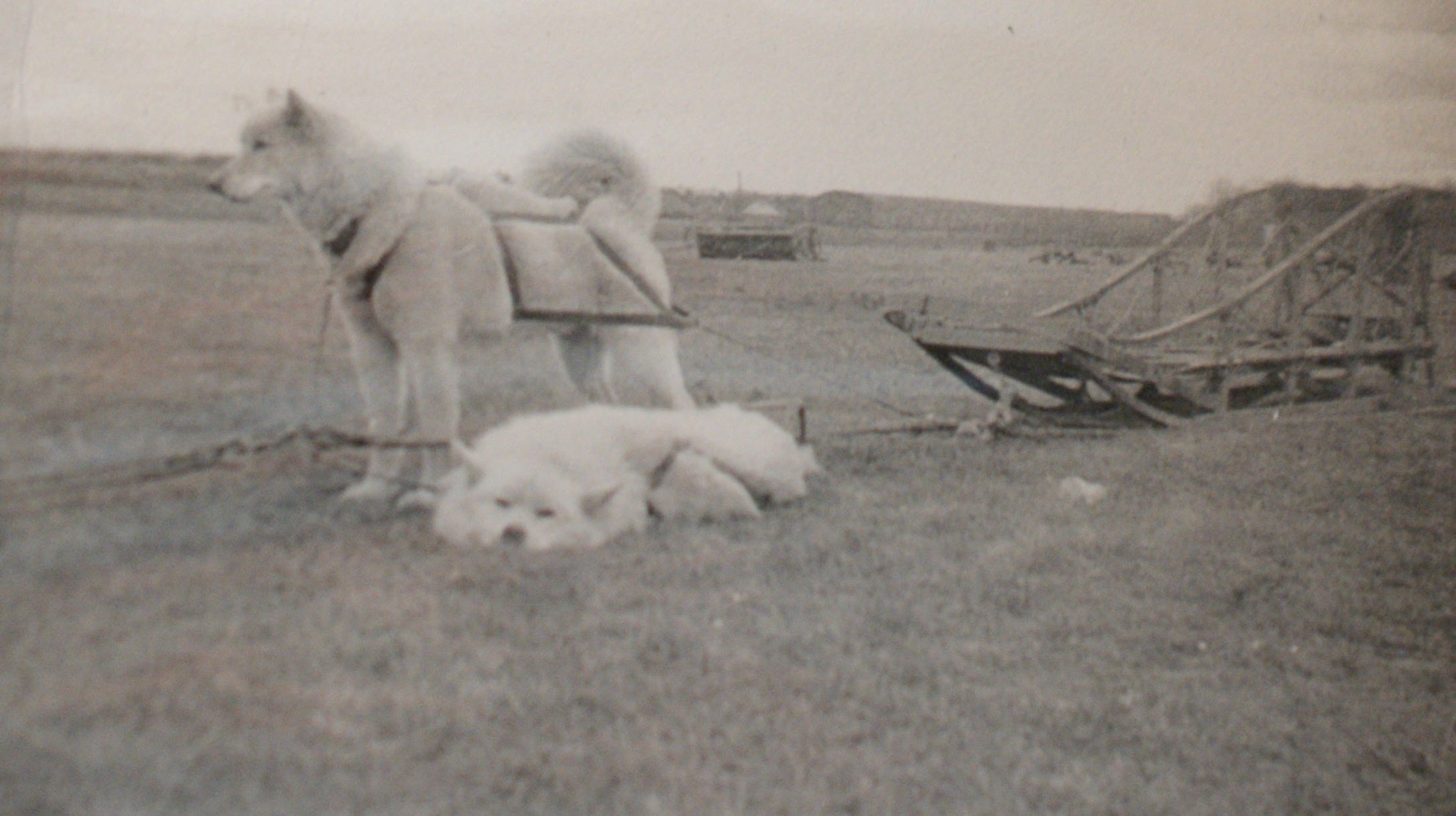
Anderson’s medical unit also mobilized dogs and sleds with wheels underneath to aid in retrieving the wounded from battle.
“I took care of so many injured soldiers,” says Anderson, “Many of these kids were only 18 or 19 years old, and I had to help place those that didn’t make it into body bags.” Anderson was a young man, too, but he was one of the lucky ones to make it back home.
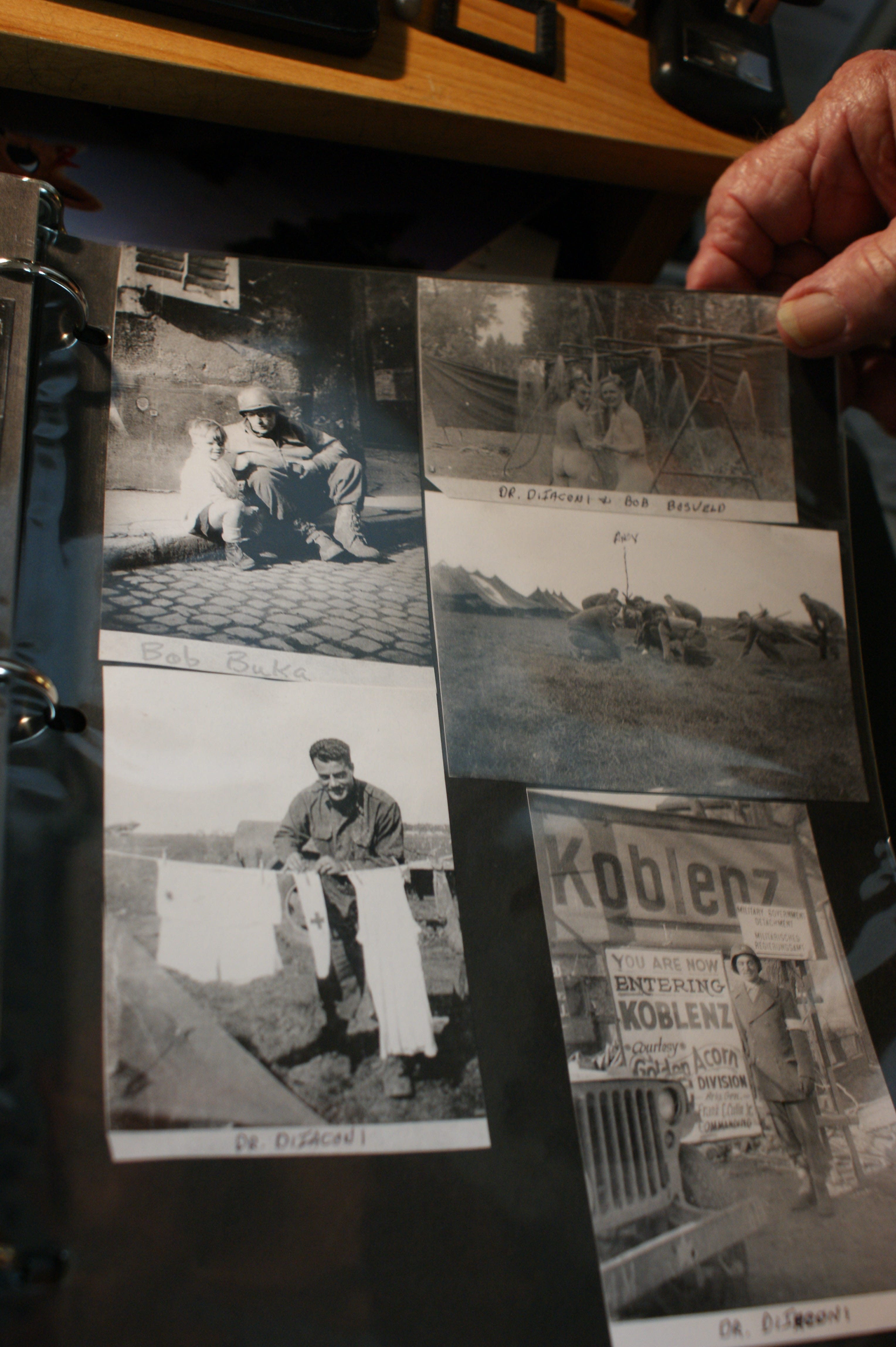
Anderson recalls being surrounded by the German Army while holed up in Bastogne during the Battle of the Bulge. “We went for 10 days without food,” states Anderson, “but I can’t complain; I survived.”
On April 11th, Anderson was part of the 3rd Army that liberated Buchenwald concentration camp, one of the largest.
“It was devastating. I was among some medics that stayed to care for those that survived that horrible camp,” says Anderson, who showed me his photos of the gruesome atrocities he witnessed. “You just can’t imagine.”
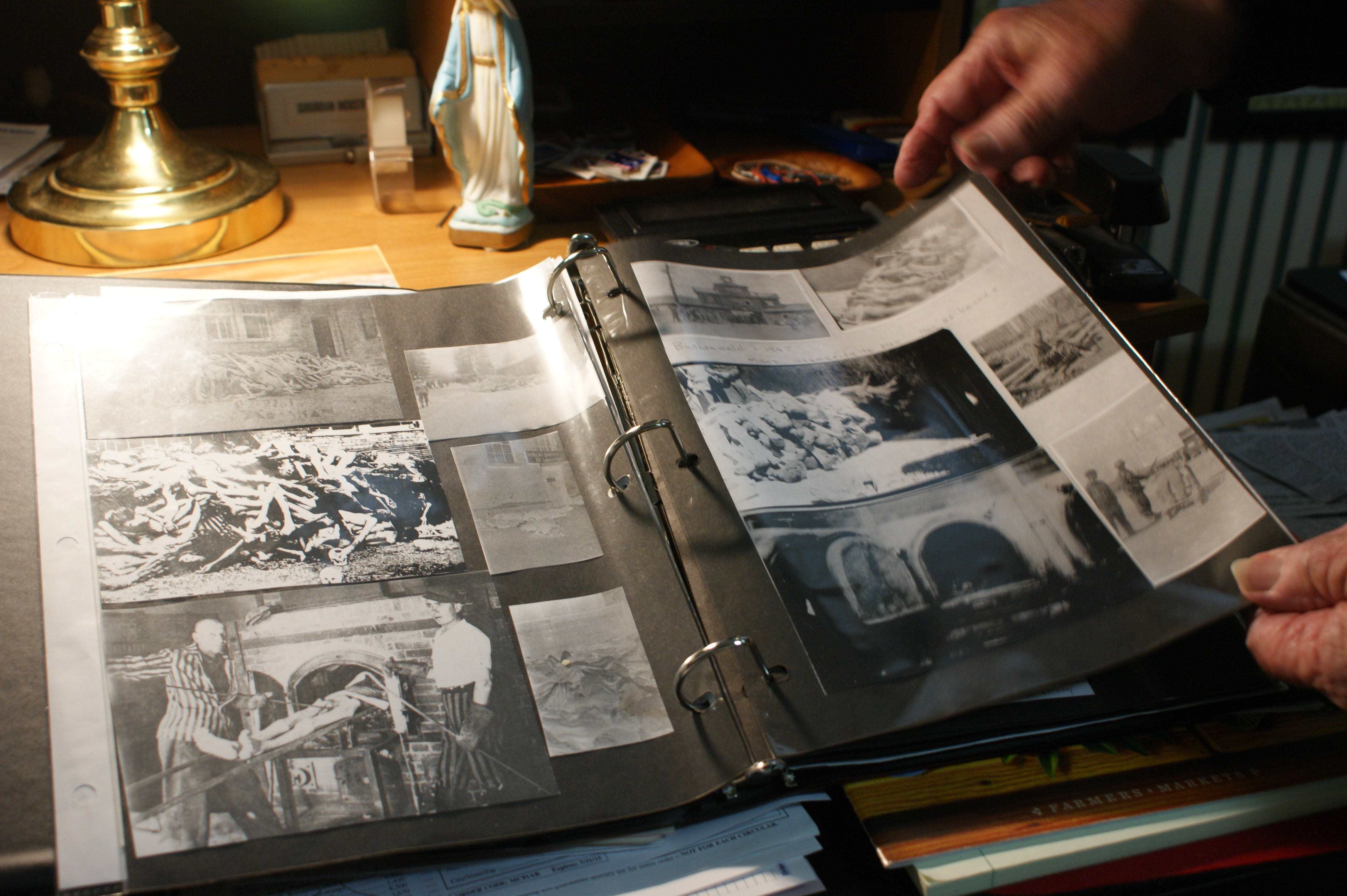
Anderson and members of his unit did not speak German, and the survivors of the camp did not speak English, so they were shown what had been done, and some posed for photos so people would know the truth of what happened.
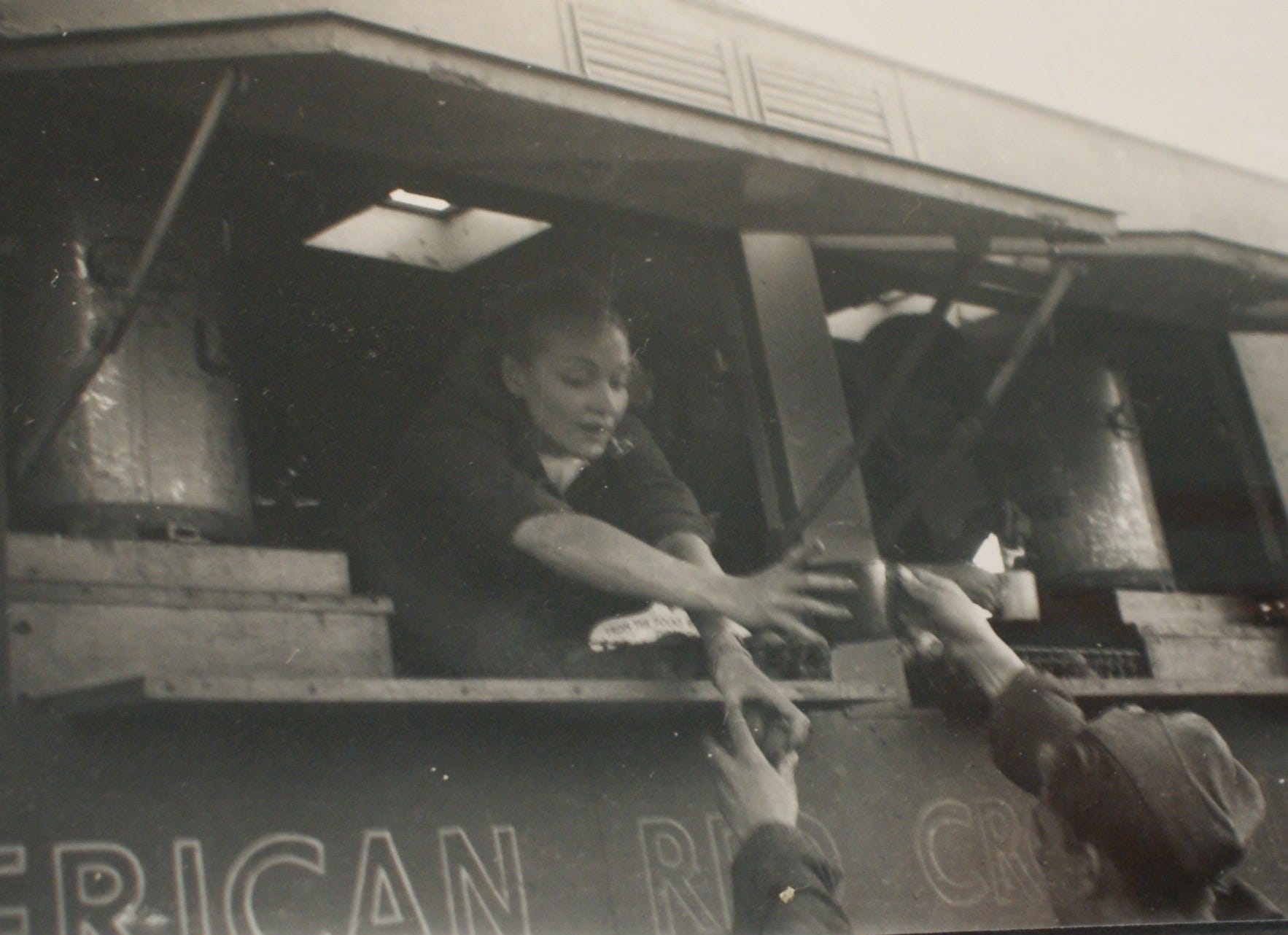
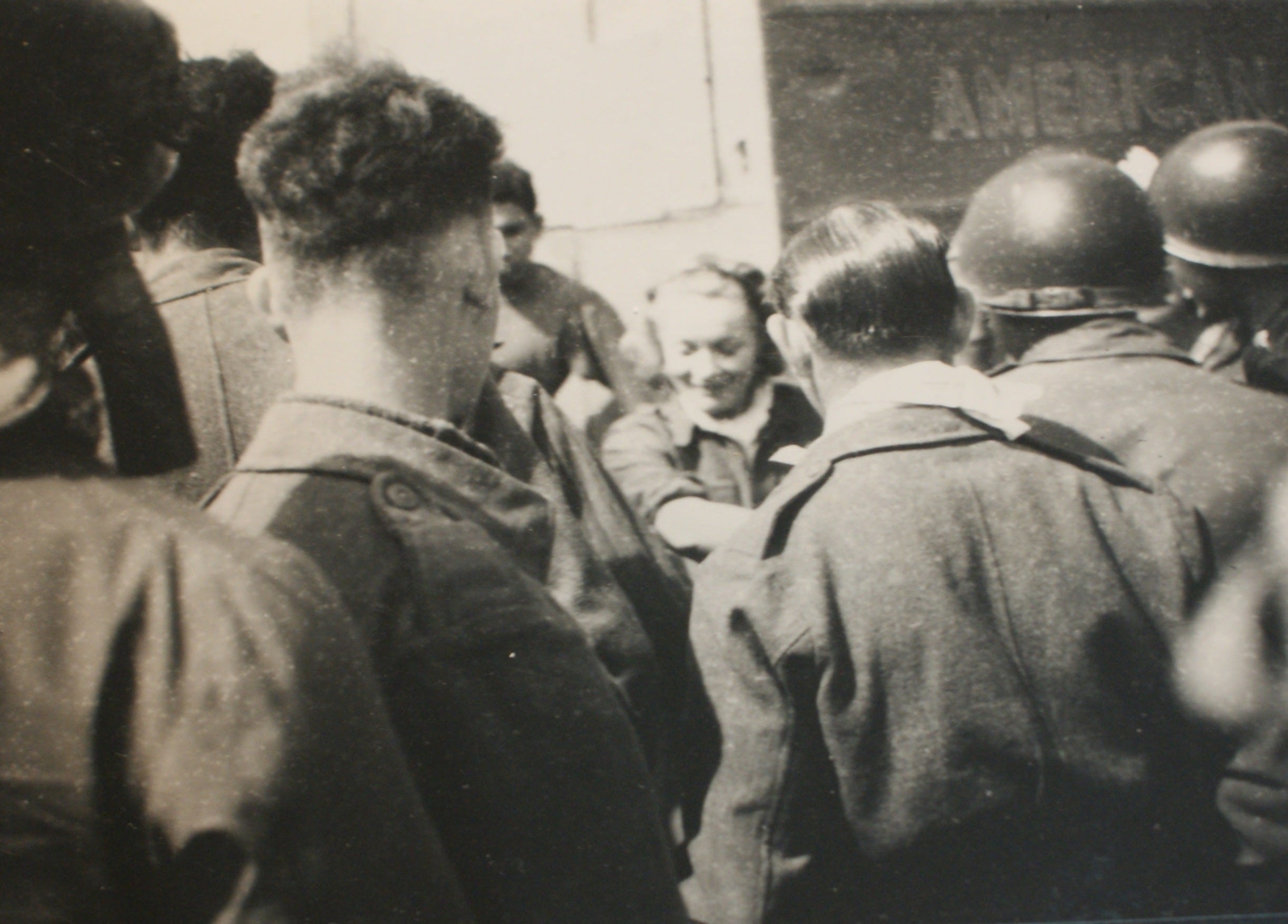
In contrast, while in Germany, Anderson met performer Marlene Dietrich. “That was something,” says Anderson with a smile, adding, “she was with the Red Cross and was entertaining the troops, but her main goal was to find her mom, which I believe she did.”
Dietrich, born in Germany, was outspoken against the Nazi party and feared for her family during the War. She immediately volunteered to entertain troops, starting in North Africa, before working her way to Germany to locate her family.
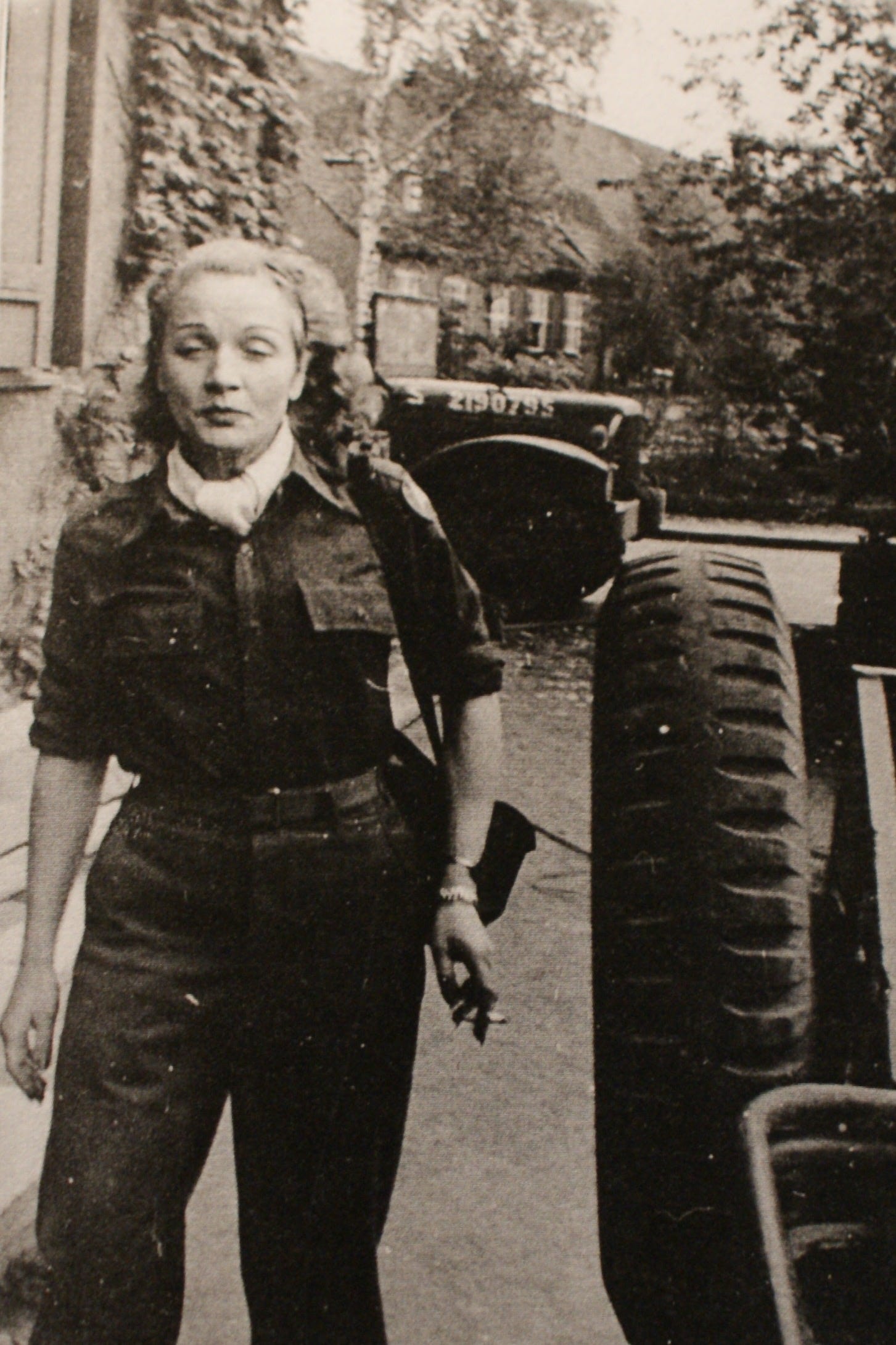
Once Anderson returned stateside, his unit prepared for the invasion of Japan, but the atomic bombs were dropped. “I was grateful for those bombs, as horrible as they were; they did save lives,” says Anderson.
“Doing what I did and seeing the things I saw was quite remarkable for a young man of my age,” shares Anderson, reflecting on his WWII experiences.
When asked about his (then upcoming) trip to visit Buchewald to commemorate the 70th anniversary of its liberation, Anderson felt like the luckiest man in the world.
“This time, I get to be wined and dined, which is a nice contrast to what I experienced 70 years ago,” said Anderson. “Germany is a beautiful country, and the people are wonderful. They just had a horrible time for a while, and that is long gone.”
Anderson’s trip was sponsored by IndyHonorFlight.org.